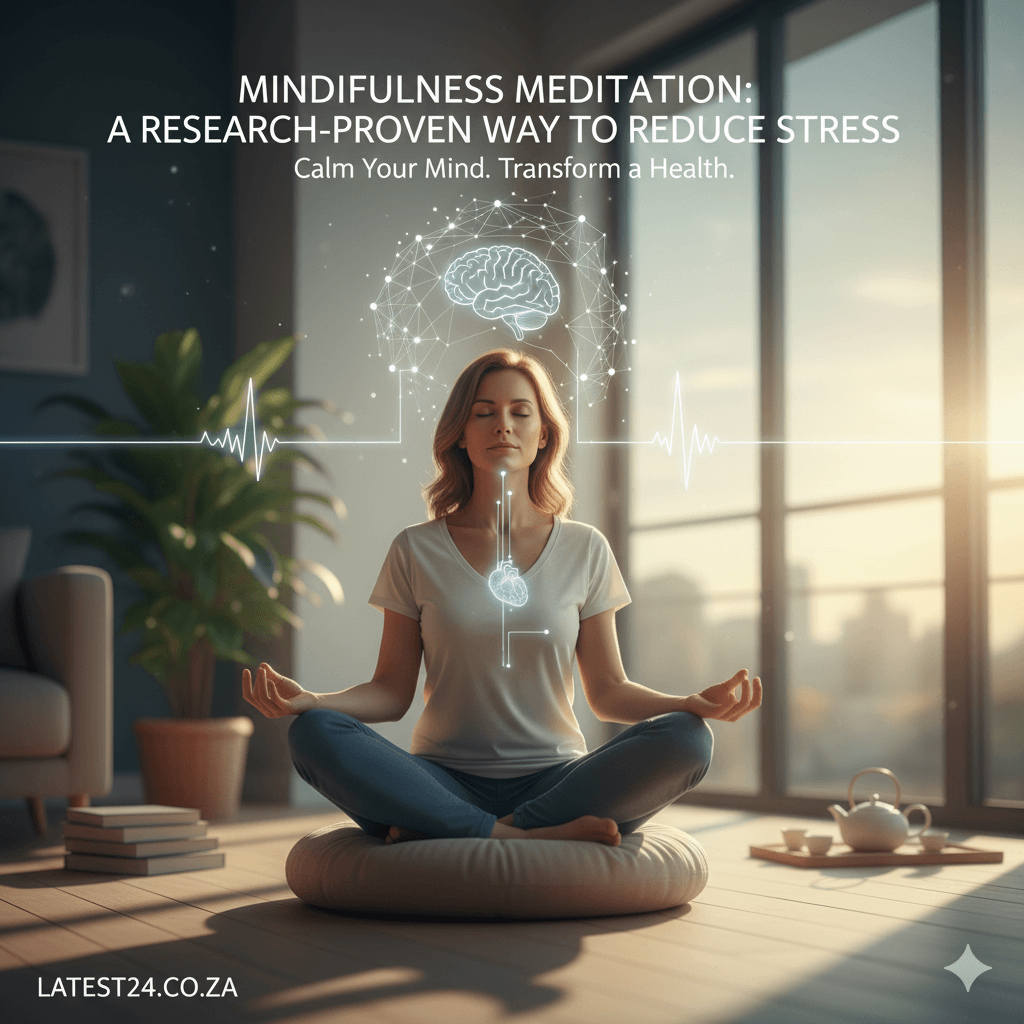

Mindfulness meditation for stress relief: Mindfulness meditation trains your mind to focus on the present moment with calm, non-judgmental awareness. Studies have found that even brief daily mindfulness sessions can alter the brain and body for the betterpubmed.ncbi.nlm.nih.govlatest24.co.za. Research shows that just 5–10 minutes of mindful breathing or body-scan meditation each day can significantly reduce anxiety and depression while improving concentration and calm. In fact, a 2006 review by the American Psychological Association called meditation “one of the most enduring, widespread, and researched” therapeutic practicespubmed.ncbi.nlm.nih.gov, underscoring why scientists take these techniques seriously. Over time, consistent mindfulness practice builds a more resilient mind, lowering stress hormones and improving overall well-beingpubmed.ncbi.nlm.nih.govpubmed.ncbi.nlm.nih.gov.
What Is Mindfulness Meditation?
Meditation can mean many things, but mindfulness meditation specifically involves two key steps: attention and acceptance. First, you train your attention on the present moment. This might involve noticing your breath as it flows in and out, feeling the sensations in your body, or simply observing any sounds or thoughts that arise. Second, you practice acceptance – observing each thought, feeling or sensation without judgment. Rather than reacting or getting carried away, you note each experience and gently let it pass. Over time, this helps break the habit of overthinking or reacting emotionally to stress.
Mindfulness classes and programs (such as Mindfulness-Based Stress Reduction or MBSR) typically use guided exercises to teach these skills. Common practices include guided breathing exercises, body scans (systematically noticing each part of the body), gentle yoga or tai chi, and visualization techniques. All these methods share the goal of anchoring you to the here-and-now. By strengthening present-moment awareness, mindfulness enables you to step back from stressors. You learn to recognize unhelpful thoughts or tensions as they happen and choose healthier responses instead of automatically reacting.
How Mindfulness Works in the Brain and Body
How does focusing on your breath calm both mind and body? The secret lies in how mindfulness affects the body’s stress pathways and brain function. Chronic stress floods the bloodstream with cortisol and adrenaline, which keep the “fight or flight” response activated. Over time, this harms the immune system and various organslatest24.co.za. Mindfulness turns down this response. Neuroscientists have found that regular mindfulness practice actually restructures the brain: it increases thickness in areas tied to attention and self-awareness and dampens activity in the amygdala (the brain’s fear center)pubmed.ncbi.nlm.nih.gov. In effect, meditators develop greater neural connectivity that supports emotional regulation and calm.
On a physiological level, mindful breathing triggers the parasympathetic nervous system, which slows heart rate and lowers blood pressure. One recent study presented at the American Heart Association found that an 8-week mindfulness program led to significantly lower blood pressure among participants with elevated readingsnewsroom.heart.org. Another systematic review noted possible beneficial changes in immune markers: meditators showed reductions in inflammatory proteins and improved indicators of aging, suggesting that mindfulness may boost immunity over timepubmed.ncbi.nlm.nih.gov. In short, mindfulness breaks the stress cycle at its root: by calming the nervous system and engaging the prefrontal cortex (the brain’s executive center), it reduces stress hormone release and the habit of rumination. Over weeks and months, these changes translate into lasting stress resilience and improved health.
Benefits of Mindfulness Meditation
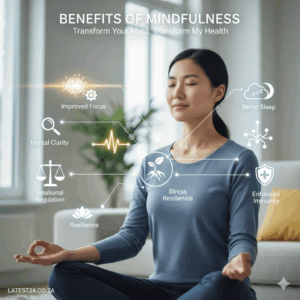
Extensive research shows that mindfulness meditation produces a wide range of mental and physical health benefits. Key benefits include:
-
Lower Stress, Anxiety, and Depression: Numerous trials and meta-analyses confirm that mindfulness practice significantly reduces stress-related symptoms. For example, a large review found moderate evidence that mindfulness training improves anxiety (effect size ~0.38) and depression (effect size ~0.30) after 8 weeksjamanetwork.com. In everyday terms, people report feeling less overwhelmed and more emotionally balanced. Even a few minutes of daily practice can blunt negative thought patterns and calm the nervous systemlatest24.co.zalatest24.co.za.
-
Improved Focus and Cognitive Function: By training attention, mindfulness enhances concentration and memory. Practitioners often report better focus and mental clarity. Brain scans reveal increased activation in attention networks and reduced mind-wandering among meditators. This means you’re better at staying on task and not getting distracted by anxiety or irrelevant thoughts.
-
Enhanced Emotional Regulation and Resilience: Mindfulness teaches how to respond to feelings instead of reacting impulsively. Over time, people become more resilient to stressors. They notice emotional triggers early and can choose calmer responses. One review concluded that mindfulness (especially MBSR training) “improves emotional regulation and brain structure, reduces anxiety, and enhances stress resilience”pubmed.ncbi.nlm.nih.gov. Practitioners commonly describe feeling more grounded and less likely to “snap” under pressure.
-
Chronic Pain Relief: Mindfulness changes how the brain perceives pain. Research indicates that regular mindfulness practice can significantly reduce the suffering associated with chronic pain. In controlled trials, patients who meditated reported lower pain intensity and more tolerance for discomfortjamanetwork.com. The effect size for pain reduction in one analysis was about 0.33, which is meaningful in medical terms.
-
Better Sleep: Because mindfulness lowers anxiety and calms the mind, many people report improved sleep quality. By clearing the mental clutter at bedtime, mindfulness can help you fall asleep faster and enjoy deeper, more restorative sleep.
-
Cardiovascular Health: Besides lowering blood pressure (as noted above), mindfulness has been associated with improved heart health behaviors. In the cited studynewsroom.heart.org, those in a mindfulness program ate more fruits and vegetables, exercised more, and had lower perceived stress than those who didn’t meditate. This suggests that mindfulness indirectly promotes a healthier lifestyle.
-
Stronger Immune Function: Preliminary evidence from controlled trials suggests mindfulness may boost the immune system. For instance, a review of multiple studies found that meditation training was linked to reductions in inflammatory markers and favorable changes in genes related to immune agingpubmed.ncbi.nlm.nih.gov. While research is ongoing, the trend is that mindful relaxation positively affects the body’s defenses.
-
Reduced Cravings and Better Addiction Coping: (While not required, some studies suggest that mindfulness helps people observe cravings without acting on them.) For example, participants who practice mindfulness report more control over urges like smoking or overeating, because they learn to see cravings as temporary experiences, not commands.
-
Holistic Well-Being: Overall, people who meditate often notice improvements in their mood, energy levels, and quality of life. They tend to feel less fatigued and more positive. In a national survey, adults who meditated daily reported 19% lower depression scores and 13% lower anxiety scores over a monthlatest24.co.za. Even medical communities have recognized mindfulness: many hospitals and clinics now offer MBSR programs precisely because of these broad wellness benefits.
In summary, mindfulness meditation is one of the most well-supported stress-management techniques in modern psychology. It works on multiple levels – reducing psychological stress and directly improving physical health markersjamanetwork.compubmed.ncbi.nlm.nih.gov. For more holistic stress-management strategies (including mindful movement, breathing exercises, and lifestyle habits), see our Stress Management Techniques Guide latest24.co.za.
Mindfulness Meditation Techniques
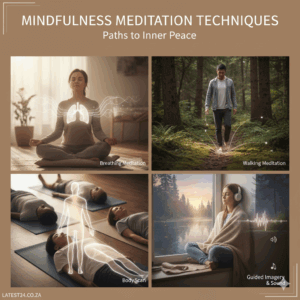
Getting started with mindfulness can be simple. Here are some common techniques:
-
Breathing Meditation: Sit or lie down comfortably. Close your eyes and focus on your natural breathing. Feel the air filling your lungs and then leaving. Whenever your mind wanders (which it will), gently bring it back to the breath. This anchors you in the present and soothes the stress response. Even short breathing sessions (1–5 minutes) can ground you during a hectic day.
-
Body Scan: Begin lying on your back or sitting. Slowly direct your attention to each part of your body, from your toes up to your head. Notice sensations like tension, tingling, or warmth, without trying to change anything. This practice helps you release physical stress and becomes aware of where you hold tension.
-
Walking Meditation: Find a quiet place to walk slowly (indoors or outside). Pay attention to the sensation of each step: how your feet lift and touch down, how your weight shifts. Breathe naturally as you walk. Focusing on the experience of walking, rather than reaching a destination, turns walking into a moving meditation.
-
Guided Imagery or Visualizations: With eyes closed, imagine a peaceful scene (like a beach or forest). Involve all your senses: hear the waves or birds, feel the breeze, smell the ocean or pine. By fully immersing in these calming images, you can lower stress and relax the mind.
-
Mindful Movement (Yoga, Tai Chi): Practice gentle yoga stretches, tai chi, or qigong. These slow movements are combined with mindful breath. For example, flowing through yoga poses while focusing on inhale/exhale trains both body and mind. A wellness guide notes that mindful movements like yoga “help restore balance to your body and mind”latest24.co.za, making them excellent complements to sitting meditation.
-
Daily Mindfulness Moments: Throughout the day, pause and practice mini-meditations. For example, before a meeting or after a phone call, take 3 deep, slow breaths. Such brief resets can cumulatively have a powerful effect on stress.
Start with whatever method feels easiest. Many people try guided meditations from apps or websites – these provide instructions and often use a calming voice. Headspace, Calm, Insight Timer, and UCLA’s Mindful Awareness Research Center have popular meditations for beginners. Experiment to find what resonates. The key is regularity: even 5 minutes every morning adds up. Over weeks, you may extend to 10–20 minutes per session as it becomes more natural.
Incorporating Mindfulness into Daily Life
Mindfulness isn’t limited to formal meditation sessions. You can weave it into everyday activities to reinforce the practice:
-
Mindful Breathing Breaks: Throughout your day, pause for a minute or two of mindful breathing. This could be between tasks, during a coffee break, or anytime you feel stress creeping in. Five mindful breaths can quickly lower tension and bring your focus back.
-
Mindful Eating: Slow down at meals. Eat without distractions (no TV or phone). Chew thoroughly and savor each bite’s flavor and texture. Pay attention to your body’s hunger and fullness cues. Mindful eating not only improves digestion but also turns eating into an opportunity to practice presence.
-
Mindful Listening: When conversing, give the other person your full attention. Listen without planning your response or judgment. Notice the tone and words. This builds empathy and helps you remain present rather than lost in your own thoughts.
-
Routine Tasks as Meditation: Turn chores into mindfulness practice. For instance, when washing dishes, feel the water temperature, the scent of soap, the sound of running water. When walking up stairs, notice each foot’s movement. By fully engaging in sensory details, mundane tasks become opportunities to calm the mind.
-
Gratitude Journaling: Spend a few minutes each day writing down things you’re grateful for or positive experiences you had. This shifts focus from stress to appreciation. Often people do this right after meditation to prolong the positive state.
-
Reminders and Anchors: Use physical reminders – such as a sticky note on your desk or a short alarm chime – to take mini mindfulness breaks. Over time, these cues train your brain to pause and check in with the present moment automatically.
Integrating mindfulness into life makes it a habit rather than a chore. As one well-being guide notes, even brief daily practice “helps you manage anxiety and stay mentally grounded”latest24.co.za. Small, consistent moments of awareness add up, so try to carry mindful attention into as many parts of your day as possible.
Getting Started and Tips
Here are practical tips to begin a mindfulness meditation practice:
-
Use Guided Resources: Beginners often benefit from guidance. Apps like Headspace, Calm, Insight Timer, or the free Palouse Mindfulness course offer narrated sessions. YouTube also has countless “Guided Mindfulness Meditation” videos ranging from 3 to 30 minutes. Start with a short guided practice and follow along.
-
Join a Class or Group: Look for local mindfulness or meditation groups at yoga studios, community centers, hospitals, or universities. Group classes provide structure and expert instruction. Many employers even offer mindfulness workshops nowadays. Participating with others can boost motivation.
-
Set Aside a Regular Time: Consistency helps mindfulness become a habit. Choose a time each day when you can sit quietly (e.g. after waking up or before bed). Even if it’s just 5 minutes, doing it at the same time builds routine. Gradually increase your session length as it feels comfortable.
-
Create a Calm Space: Designate a quiet, comfortable spot for meditation. It could be a corner of your room with a cushion or chair. Remove distractions (turn off TV/music) and let others know not to disturb you. However, if a dedicated space isn’t available, you can meditate anywhere – even sitting in your car for a moment – as long as you feel safe and can focus.
-
Be Patient and Kind to Yourself: It’s normal to feel restless or find your mind wandering, especially at first. Don’t criticize yourself for it. When thoughts arise, acknowledge them and gently bring your focus back. With time and practice, this will get easier.
-
Stay Consistent: The benefits of mindfulness come with regular practice. Many people find that even once you’re comfortable meditating, short “top-up” sessions during the day (e.g. a few mindful breaths in stressful moments) keep you balanced.
-
Explore Different Techniques: If one practice doesn’t resonate, try another. Mindfulness has many forms – seated meditation, walking, movement, or sensory focusing – so find what feels natural for you.
-
Consider Professional Guidance: If stress is overwhelming or you have trouble practicing on your own, a psychologist or counselor trained in mindfulness can help tailor the practice to your needs.
Starting may feel awkward or challenging at first, but each session strengthens your mindfulness muscle. Even if you can only manage a minute or two initially, that’s enough to begin. Over weeks, you may notice that moments of stress don’t hit as hard, and you can recover more quickly.
Conclusion
Mindfulness meditation is a simple yet powerful tool to reduce stress and improve health. Research confirms that regular mindfulness practice literally rewires the brain to lower anxiety and stress hormone levelspubmed.ncbi.nlm.nih.govpubmed.ncbi.nlm.nih.gov. Large reviews and meta-analyses show significant improvements in stress, anxiety, and depression after mindfulness trainingjamanetwork.comlatest24.co.za. In practice, even short daily sessions build a calmer baseline and greater emotional balance over time.
Getting started is free and easy. YouTube, apps, and community classes can guide you. Just a few minutes a day, practiced consistently, can lead to measurable benefits. Mindfulness works best as part of a holistic stress-management routine (including exercise, sleep, and social support). For example, pairing mindful meditation with healthy habits like exercise and balanced diet can amplify results. Institutions from hospitals to schools now teach mindfulness-based programs (like MBSR and MBCT) because of the strong evidence behind them.
To deepen your practice, explore more guided techniques and join supportive communities. Remember, mindfulness is a skill: the more you practice, the more natural it becomes. Over weeks and months, you’ll likely find that challenges still arise, but you meet them with greater calm and clarity. Every time you pause and breathe mindfully, you are literally strengthening your brain’s ability to handle stress. As one review put it, the long-term payoff is enhanced well-being and resilience in both mind and bodypubmed.ncbi.nlm.nih.govjamanetwork.com.
For additional strategies and exercises to build a healthier, calmer life, see our articles on Relaxation Techniques for Stress Relief latest24.co.za and 11 Ways to Improve Your Mental Health Today latest24.co.za. These guides include practical tips on breathing exercises, mindful movement, self-care habits, and more proven methods to complement mindfulness. By combining these evidence-based approaches, you can create a powerful self-care routine that significantly lowers stress and boosts your mental health.