


Do you often find yourself caught in a cycle of “what ifs,” replaying conversations in your head, or feeling anxious about every decision? You’re not alone. Overthinking – that relentless replay of past events and relentless worry about the future – is very common across cultures In moderate doses, careful reflection can be useful. But when thinking becomes a chronic, negative loop, it can harm your mood, stress levels, and self-confidence. In this article, we’ll explain what overthinking is, list ten warning signs that you may be an overthinker, describe six common patterns of overthinking, and share strategies to help you break free from this exhausting habit.
What is Overthinking?
Overthinking is when your mind stays stuck on a thought or worry for too long and spins it around from every angle. Technically, it means “thinking about a situation excessively and analyzing it for long periods”. For example, you might keep replaying a past conversation, worrying about whether you said the right thing, or fixating on future “what if” scenarios (like what might go wrong in an upcoming event). By design, overthinking floods your mind with doubts, second-guesses, and worst-case imaginings.
Although reflecting on problems can sometimes help us make a plan, overthinking is different. It becomes counterproductive when thoughts loop without resolution, focusing only on negative outcomes and fears. In fact, research shows that chronic rumination and worry are linked to higher rates of depression, anxiety, and stress-related disorders Overthinking steals your peace of mind, making it hard to make decisions or relax.
10 Signs You Might Be an Overthinker

Spotting overthinking in yourself can be tricky because it often feels normal—especially if it’s been your habit for years. However, here are ten common clues that your mind may be in overdrive:
-
You replay past conversations endlessly. Many overthinkers get “stuck in rewind,” reviewing things they said or did in past interactions. You might catch yourself going over a meeting, date, or phone call again and again, fretting about what you could have said differently. This rumination on the past can drain energy and mood. Studies note that people prone to anxiety often compulsively analyze past events as if to prepare better for the future. Instead of letting go, you mentally replay and criticize every detail long after it’s done.
-
You can’t stop worrying about the future. If your mind is constantly fixated on upcoming events or decisions, imagining all the worst-case scenarios, that’s a red flag for overthinking. This is sometimes called anticipatory anxiety – “worry about the future, the fear that bad things might happen”. For example, before a presentation you might replay catastrophic scenarios (freezing up, embarrassing yourself) and then extend that to a cascade of negative outcomes. Continual worry about “what if something goes wrong” means you’re investing too much mental energy in hypotheticals.
-
Your brain seems to never shut off. Overthinkers often feel like their minds are on 24/7 overdrive. Even when trying to relax or sleep, your thoughts keep racing. Research confirms that rumination (repetitive negative thinking) makes it much harder to fall asleep and stay asleep. If you lie awake at night replaying mistakes or future worries, or wake up exhausted because your mind just wouldn’t turn off, this chronic mental churning is a clear sign of overthinking. It can lead to ongoing stress, insomnia, and physical tension.
-
You have trouble living in the present moment. Overthinkers tend to dwell on things they can’t change and worry about things that haven’t happened yet. You may find yourself lost in “what ifs” – what if you had chosen a different career, said something different, or taken another path? These repetitive “what if” thoughts pull you out of the present. Instead of focusing on today’s tasks or goals, you’re busy fixating on past regrets or future uncertainties. This constant mental wandering can leave you feeling ungrounded and stressed in everyday life.
-
You struggle to make even simple decisions. An overactive mind analyzing every tiny detail can paralyze you. “Analysis paralysis” is a state where decision-making becomes impossible because you can’t settle on an option. You might delay even trivial choices (what to eat for dinner, which route to drive) because you’re overanalyzing. Research shows that the more we overthink a problem, the harder it gets to decide In fact, one expert notes that in analysis paralysis “you become so wrapped up in the different options that you can’t make even one decision”. This freeze can make you miss deadlines or opportunities because you feel you must find the perfect option before acting.
-
You constantly seek reassurance from others. If you ask friends or family to double-check every choice or repeatedly confirm that “everything is okay,” it may be driven by overthinking. Reassurance-seeking is a common coping tactic – you try to quiet your doubts by having someone else affirm your decision or feelings. But ironically, excessive reassurance fuels anxiety. Psychologists describe a “reassurance trap” where people get caught in endless “what ifs” and debates in their head. For example, you might email a coworker three times to confirm project details, or ask friends repeatedly if you said something offensive. This behavior shows you’re stuck in mental loops of doubt. Over time, relying on constant validation can actually reinforce insecurity and amplify your worries.
-
You have perfectionist tendencies. Overthinkers often set impossibly high standards for themselves. You might find yourself obsessing over tiny details, replaying every minor imperfection, or feeling crushed by even small mistakes. Because you fear anything less than perfect, you spend extra time analyzing and redoing tasks. Unfortunately, this perfectionism fuels procrastination: nothing ever feels “good enough” to finish. For example, you might draft and redraft an email 10 times because you fear it might sound rude or imperfect. This cycle of self-criticism and overanalysis prevents you from completing things or moving on.
-
Your self-esteem takes a hit. If you tend to find fault with yourself, focusing on perceived flaws or failures, it’s likely overthinking is at play. Constantly examining your own behavior or worth under a harsh light can slowly erode confidence. Overthinkers often replay negative self-talk – “I’m not good enough,” “I messed up,” “Why did I do that?” This relentless self-criticism leads to feelings of inadequacy. In fact, when someone spirals through negative thoughts and takes them as truth, it can create a downward loop of low self-esteem and depression. (It’s worth noting that practices like positive affirmations have been shown to improve self-esteem and resilience, underscoring how negative thought cycles hurt our confidence.)
-
You experience physical symptoms of stress. Overthinking is draining, and chronic mental stress often shows up physically. Common signs include muscle tension, headaches, fatigue, digestive issues, rapid heartbeat, or high blood pressure. For instance, continually ruminating about a problem can keep your body in a state of high alert, leading to insomnia, migraines, or an upset stomach. If you notice your sleep is disrupted by racing thoughts, or if worrying about decisions gives you jittery nerves and aching muscles, that’s your body signaling that your mind is overstimulated.
-
You have difficulty letting go of worries or grudges. Overthinkers tend to hang onto concerns long after they should have passed. You might replay an old argument, or constantly check that you haven’t offended someone, even years later. Old mistakes and perceived slights linger in your mind. This “mental hang-up” means you’re carrying around stress from the past. Over time, this makes it hard to move forward – you’re still reliving memories that ideally you would have moved beyond. Studies note that repeatedly second-guessing past decisions (asking “should I have done X instead?”) becomes a form of “mental torture” that keeps you trapped in those thoughts.
If you recognized many of these signs in yourself, don’t panic. Awareness is the first step. Let’s look at common patterns of overthinking and then move on to ways you can break the cycle.

6 Common Types of Overthinking
While every person overthinks in their own way, these six styles often overlap:
-
1. Rumination. This is when your mind obsessively replays the same negative thoughts or past events on a loop. It feels like a song stuck on repeat, except it’s a distressing memory or worrying scenario you keep revisiting. Rumination usually focuses on problems or perceived mistakes. For example, you might repeatedly question every word you said at a meeting or worry you offended someone, constantly thinking “What if I hadn’t said that?” In clinical terms, rumination is defined as “engaging in a repetitive negative thought process that loops continuously in the mind without end”. It’s often a feature of depression and anxiety disorders. Rumination traps you in the past and prevents you from finding solutions or peace.
-
2. Catastrophizing. Here, your thoughts quickly jump to the worst possible outcome of any situation. It’s a kind of thinking where you magnify minor issues into disasters. For instance, you miss a call from a friend and immediately imagine they’re furious and you’ve ruined the relationship. Or, during a presentation you picture fainting on stage and then never getting a job. Psychologists describe catastrophizing as “expecting the worst possible outcome of a situation”. People who catastrophize live in a state of perpetual alarm, always bracing for disaster. This type of overthinking can be paralyzing – you might avoid new opportunities altogether because you’re convinced they will end in catastrophe.
-
3. Analysis Paralysis. Sometimes called “choice paralysis,” this type occurs when you analyze so many options that you become frozen. You might spend hours weighing pros and cons without ever choosing, or endlessly searching for more information instead of deciding. The Cleveland Clinic explains that analysis paralysis makes you so “wrapped up in different options that you can’t make even one decision. People with this style of overthinking have an intense fear of making the wrong choice. They may tie their self-worth to choosing perfectly and therefore avoid deciding. This not only wastes time but often increases anxiety – after all, stressing about a decision forever leaves you stuck in worry. Analysis paralysis often accompanies anxiety, ADHD, and even depression, because those conditions can amplify doubt and indecision.
-
4. Dwelling on the Future. While catastrophizing focuses on doom, dwelling on the future is about endless planning and worry for what’s ahead. It’s a constant mental rehearsal of future scenarios, good or bad, that drains you. This is often called anticipatory anxiety: anxious thoughts about upcoming events or uncertaintiesadaa.org. You might fixate on an upcoming job interview, a trip, or even mundane daily tasks, imagining every possible outcome. Unlike proactive problem-solving, this type of thinking doesn’t look for solutions; it’s just speculative worry. It fuels stress because the future, by nature, is unpredictable. The key point is that you spend mental energy trying to control things you really can’t control yet.
-
5. Perfectionism. Perfectionistic overthinking comes from setting sky-high standards for yourself and obsessing over every detail. You may spend inordinate time analyzing whether your work, appearance, or performance is “good enough,” often finding it lacking. This can lead to repeated revisions or procrastination: if “perfect” isn’t achieved, you feel it’s not worth finishing at all. Perfectionists often engage in all-or-nothing thinking (if it’s not perfect, it’s a failure) and ruminate on minute errors. Over time, this causes stress and burnout, because the bar is impossible. In fact, therapists note that challenging perfectionistic thoughts is a key part of cognitive-behavioral therapy for overthinkers, since perfectionism often triggers rumination loops.
-
6. Comparing Yourself to Others. Here, you constantly measure yourself against what you imagine about others. Maybe you scroll social media and obsess over how your life “should” be based on others’ highlight reels. Or in daily life you think, “She handles that so well; why can’t I?” This comparative thinking can trap you in negativity, as you focus on perceived shortcomings. Overthinkers who compare may dwell on how others succeeded or failed and wonder why they themselves fall short. This style often leads to low self-esteem (“I’m not good enough”) and fuels envy and anxiety. It’s unproductive because it relies on partial information (you see only part of others’ lives) and distracts from self-improvement.

Is Overthinking Always Bad?
Not necessarily. Some degree of thoughtful reflection or planning is healthy – it helps us learn from mistakes and prepare. Thinking things through (like planning a trip, learning from feedback, or solving problems) can be very beneficial. The problem isn’t thinking; it’s how you think. The danger comes when thinking becomes chronic, negative, and unproductive. If most of your thoughts are repetitive worries, criticisms, or catastrophic scenarios, then overthinking has turned against you.
Experts point out that overthinking itself is not a mental illness – it’s a habit or a thought pattern. It often goes hand-in-hand with conditions like depression or anxiety, but on its own it’s a poor coping strategy. When you find yourself in an endless loop of doubt or dread, you lose creativity and motivation. It can also erode your confidence: if your inner voice only ever finds faults, you begin to truly believe them. The key is balance – using mental energy to thoughtfully address challenges, without letting fear and self-doubt take over.
How to Stop Overthinking
Good news: while you can’t magically turn your mind off, you can learn new habits to manage and quiet overthinking. The goal isn’t to eliminate all worrying (that’s unrealistic), but to keep it in healthy bounds and redirect your thinking. Here are evidence-based strategies to try:
-
Accept Some Uncertainty. Overthinking often comes from a need to feel in control. When you feel anxious about a situation, your mind tries to cover every outcome to avoid being caught off-guard. Remind yourself: 100% certainty is impossible. Embrace the fact that life is unpredictable and you’ll never have all the answers. This mindset shift (sometimes called a “growth mindset”) can loosen the grip of overanalysis. Psychologists note that realizing some uncertainty is normal helps people let go of endless rehashing
-
Recognize Thoughts Aren’t Facts. Just because you have a scary thought doesn’t mean it’s true. Overthinkers often take negative thoughts at face value (“I’m a failure”, “They must hate me”) instead of questioning them. Cognitive-behavioral therapy teaches us to challenge and reframe such thoughts. For example, when a worrying thought pops up, ask yourself: Is this really true? What evidence do I have? Am I assuming the worst? Replace it with a balanced statement. Remember that your mind can be a liar when it’s anxious. Research shows that practicing this “thought challenging” can significantly reduce spiraling anxiety
-
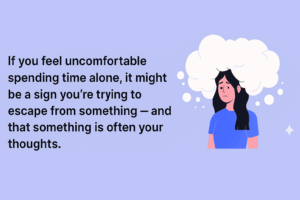
Change How You Respond to Discomfort. Overthinking often tries to avoid uncomfortable emotions like anxiety, boredom, or uncertainty. When you feel an urge to ruminate, instead of pushing it away, try accepting that unpleasant feeling. Mindfulness meditation is a powerful tool here. Studies (including a review of over 200 studies!) show mindfulness-based practices dramatically reduce stress and rumination. Simply noticing your thoughts without judgment and returning focus to the present (your breath, your surroundings, etc.) weakens the overthinking loop. Over time, you’ll learn that feelings of anxiety or doubt can be tolerated and will pass on their own, rather than inviting endless worry about them.
-
Challenge Perfectionism and Adopt a Growth Mindset. If you tend to demand perfection from yourself, consciously remind yourself: Mistakes are learning opportunities. For example, instead of thinking “I must not fail this task,” try “I’ll do my best; even if it’s not perfect, I’ll learn from the outcome.” Research on mindset shows that those who see abilities as improvable (a growth mindset) handle setbacks with less stress. Overthinkers often benefit from this shift. When you catch yourself obsessing over “flaws,” reframe by listing what went well, or what you learned. Reaffirm that being “good enough” is fine, and that people (including you) typically give more leeway than your inner critic does.
-
Write It Down (Journaling). Taking your worries out of your head and onto paper is a great way to pause a thought spiral. Journaling helps you organize and process your thoughts and feelings. Studies have found that expressive writing can boost your mood and reduce stress. When anxious or overthinking, try writing down exactly what you’re concerned about and why. You might even set a timer for 5–10 minutes to “brain dump” all fears. Seeing thoughts on paper often makes them less intimidating and easier to analyze objectively. It’s like clearing clutter: once you see the worries outside your mind, they often shrink in power. Research suggests that putting anxious thoughts on paper can help you “let go of worries and free up mental space”.
-
Schedule “Worry Time.” It sounds strange, but some therapists recommend giving yourself permission to worry—just not 24/7. Pick a short, fixed time each day (say 15–20 minutes) as your designated “worry period.” During the day, if anxious thoughts arise, gently jot them down and remind yourself you’ll address them at worry time. Then later, in that allotted window, you can revisit those concerns one by one, analyze them, and find possible solutions if needed. Research indicates that this technique can actually reduce overall anxiety: knowing you have a time to handle your worries often keeps them from dominating the entire day. It helps contain rumination, because it says, “I will think about it, but not right now.”
-
Use Positive Affirmations. Overthinking feeds on negative self-talk. Counteract it by adopting a set of positive statements about yourself and your ability to cope. For example: “I can handle whatever comes,” “I am competent and capable,” or “Even if things go wrong, I will be okay.” The practice of repeating affirmations each day has been linked to improved self-esteem and resilience. In neuroscience terms, affirmations create healthy mental pathways: they prime your brain to focus on your strengths and solutions rather than on worst-case scenarios. Do this consistently (morning or night) to gradually shift your mindset away from self-doubt. Over time, your inner narrative will become more supportive and realistic.
-
Practice Mindfulness and Staying Present. Cultivating moment-to-moment awareness can seriously undercut overthinking. Mindfulness means paying attention to what’s happening right now, without judgment. For example, when you catch your mind racing, pause and notice: What sensations am I feeling? What can I hear right now? What emotions are present? Research shows that mindfulness and meditation reduce stress and anxiety by hundreds of studies’ worth. It makes you “less likely to react with negative thoughts” and less prone to ruminatebetterhealthpsychology.com. You can start simply by taking a few deep breaths when anxious, or doing a short guided meditation. Another trick: during everyday tasks, fully immerse yourself (feel the sensation of water when washing dishes, or notice the colors and sounds as you walk outside). This practice trains your mind to gently shift focus back to the present when it starts spiraling into the past or future.
-
Shift to Problem-Solving. Overthinking and problem-solving are not the same. If you notice yourself dwelling on a worry, ask: Is this fixable? If there is a real problem, brainstorm at least one action you can take. For example, if you’re anxious about a work presentation, rather than just imagining every mistake, make a checklist of things to prepare (outline your talk, practice in front of a friend, etc.). Taking concrete steps gives your mind a sense of control and can quiet abstract fears. If the worry isn’t solvable right now (say, you’re anxiously imagining a future move), remind yourself that planning is useful, but incessant worrying isn’t. Then pivot to a distraction.
-
Distract Yourself with Healthy Activities. Sometimes the most effective way to stop rumination is to do something else entirely. Find activities that fully engage your mind or body: exercise (runs, yoga), creative hobbies (drawing, playing music), puzzles or games, or talking with a friend about a fun topic. One study found that brief distraction breaks can help your brain subconsciously work on the problem in the background. For instance, going for a walk might physically help tension, and mentally give your subconscious room to sort out thoughts. If you’re lying in bed unable to sleep because of overthinking, get up and read a light book instead of lying there. The key is giving your mind something else to focus on. Even doing chores mindfully (really feel the soap bubbles when washing dishes, or the sensation of water on your body in the shower) can pull you out of the worry cycle.
-
Consider Professional Help. If you find overthinking is a near-constant problem or it’s severely affecting your well-being, you might benefit from therapy. Overthinking is often tied to underlying issues like anxiety, OCD, or trauma. A licensed therapist can help you uncover those roots and teach coping strategies. In particular, Cognitive Behavioral Therapy (CBT) is very effective for rumination: it trains you to spot unhelpful thought patterns and reframe them. For example, when catastrophizing, you’ll learn to challenge the “always worst-case” assumption with more realistic statements (“If Plan A fails, I can try Plan B”). You’ll also learn anxiety-management skills, mindfulness exercises, and how to gradually tolerate uncertainty. Many people find that just talking through their fears in a structured way helps reduce their power.
Overcoming overthinking takes practice and patience. Start with one or two strategies above and build from there. Remember, the goal is progress, not perfection. Small changes—like taking five minutes to breathe or writing a single worry on paper—can help you break the habit of overthinking over time.
Getting More Help
If overthinking is overwhelming you, know that help is available. Online therapy services (for example, Calmerry) offer convenient access to licensed therapists from home. A therapist can personalize these strategies to your situation and help you make lasting changes. Many people find that with the right guidance and practice, they can quiet the incessant mental chatter and regain a sense of control and calm.
Whatever steps you choose, remember: change is possible. By recognizing your patterns and actively working to shift your thinking, you can stop the endless loop of overthinking and start living more fully in the moment.
Sources: Authoritative health and psychology sources were used to define overthinking and its effects describe common symptoms and recommend coping strategies. The information above is based on current research and expert guidance on rumination and anxiety.