

No one teaches you how to admit you might be addicted to the hope of someone. Nor how to stop being loyal to someone who isn’t emotionally equipped to receive what you’re offering. Some part of you has always known this, a quiet voice trying to get your attention.
Let me explain.
A lot of us are afraid that if we stop hoping, we’ve somehow failed. We haven’t. Sometimes, chemistry doesn’t equal compatibility. We’ve all been there—drawn to someone with a powerful force, only to find ourselves in a cycle of half-effort and unfulfilled promises. At some point, you’ve got to stop clinging to the potential of what this could be and look at the reality of what it is. You’ve got to ask yourself, brutally and with compassion:
Do I feel safe here? Or am I just addicted to the hope that maybe one day, they’ll become what I need?
And if the answer hurts, that’s okay. Let it hurt. Because the pain of facing the truth is still better than the slow, quiet suffering of a loop that kills your spirit. The healing begins when you stop waiting. Because you’ve finally started listening. You don’t need more hope. You need peace. You need truth. You need reciprocity.
Sometimes, the most powerful thing you can do is stop romanticizing the potential and start responding to the reality, even if it breaks your heart.
This is where your journey starts. You don’t feel safe; you feel hopeful. And those are not the same thing. Hope has kept you loyal to versions of people that only exist in your imagination. It has had you rehearsing timelines where they wake up, where they realize, where they finally become the person you need. But you’ve already seen what you needed to see. The question now isn’t, “What are they doing?” The question is, “Why do you keep negotiating with the evidence?”
It’s time to stop asking if they’ll change. Ask instead: What version of you keeps tolerating emotional poverty while calling it love?
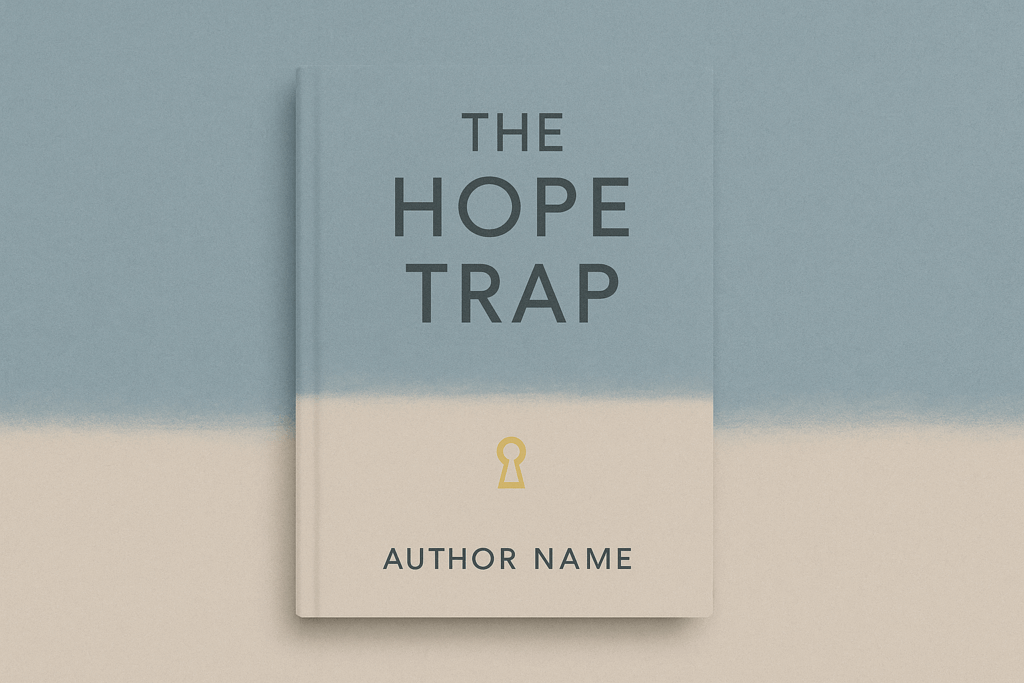
The Hope Trap: Chapter 1 – Hope vs. Reality
Sometimes, the most difficult conversation you’ll ever have is the one you have with yourself. The one where you finally admit that the potential you see in someone is more real to you than the person standing in front of you.
This is the core of the hope trap: mistaking chemistry for compatibility.
Chemistry is the lightning bolt. It’s the instant connection, the shared laughs, the feeling that you’ve known this person forever. It’s exhilarating and, frankly, addictive. But chemistry is a feeling. It’s the initial spark that draws you in.
Compatibility, on the other hand, is the long, steady burn. It’s the ability to communicate openly, to trust that they’ll meet you halfway, and to know that your needs are not an inconvenience. It’s about shared values, mutual respect, and a fundamental feeling of safety. And the hardest truth to swallow is that you can have a dizzying amount of chemistry with someone and have zero compatibility.
A lot of people are afraid that if they stop hoping, they’ve somehow failed. You haven’t. You can’t fail at something that was never going to work in the first place. You are not a disappointment for wanting a relationship that provides what you need—peace, truth, and reciprocity.
At some point, you’ve got to stop clinging to the idea of what this could be and look at the reality of what it is. You’ve got to ask yourself that brutal, compassionate question: Do I feel safe here? Or am I just addicted to the hope that maybe one day, they’ll become what I need?
And if the answer hurts, that’s okay. Let it hurt. Because the pain of facing the truth is still better than the slow, quiet suffering of a loop that kills your spirit. This isn’t about giving up on love; it’s about giving up on a specific version of love that was never truly yours. The healing begins the moment you stop waiting and start listening. You don’t need more hope. You need peace.
The Hope Trap: Chapter 2 – The Myth of Potential
When you’re caught in the hope trap, your mind becomes a stage. You become the director of a play, constantly rehearsing timelines where they wake up, where they realize, where they finally become the person you need them to be. You’re not just hoping; you’re actively creating a fantasy, a version of them that only exists in your imagination.
This is the myth of potential.
Potential is a beautiful thing in theory. It’s what you see when you look at a bare tree in winter and imagine the leaves and fruit it will bear. But the potential of a person is not a guarantee. You’ve already seen what you needed to see. The actions, the words, the emotional distance—that is the information you have.
The question now isn’t, “What are they doing?” The question is, “Why do you keep negotiating with the evidence?”
You negotiate with it every time you make an excuse for their behavior. You negotiate with it when you tell yourself, “They’re just busy,” “They don’t mean it,” or “Things will get better when…” You are trading the reality of your present for the possibility of a future that may never arrive.
It’s time to stop asking if they’ll change. That question gives your power away, making your peace contingent on their actions.
Ask instead: What version of you keeps tolerating emotional poverty while calling it love?
This is the most critical question. It shifts the focus from their inability to give to your willingness to accept. It’s not a question of blame, but one of profound self-awareness. It asks you to confront the part of you that has been settling, negotiating, and spiritualizing red flags in the name of hope. This is where your journey from hope to healing truly begins.
The Hope Trap: Chapter 3 – Radical Acceptance
So, you’ve looked at the reality of the situation. You’ve stopped negotiating with the evidence and asked the most difficult question of all: “What version of you keeps tolerating emotional poverty while calling it love?”
Now comes the work. The work of radical acceptance.
Radical acceptance is often misunderstood. It’s not passive. It’s not about giving up. It’s the opposite. It’s an act of profound and active surrender. It’s the courageous choice to stop fighting the reality of a situation and instead, see it for what it is.
Radical acceptance sounds like this:
“I wanted this. I really did. I saw the best in them, and I stayed longer than I should have. I prayed, I tried, I over-explained, I softened every edge of myself so I wouldn’t scare them off. And still… they didn’t choose to meet me there.”
That’s not weakness. That’s not a failure. That is simply information.
It’s the final piece of the puzzle you needed to see the full picture. The information that tells you this path is not for you. It’s the clarity that allows you to stop making excuses for the grey areas and to stop spiritualizing red flags by calling it divine timing. Sometimes, it’s not timing; it’s trauma. And sometimes, the very thing you’re clinging to is a cycle you need to break.
Hold yourself in the in-between.
This is the detox. This is the shaking. The missing. The part where your brain still craves the hit of dopamine that came from their half-effort attention. This is the withdrawal, and it’s a necessary part of the process. You have to allow yourself to grieve fully—the potential, the fantasy, the person you wished they were. Let it break your heart, because that heartbreak is the first step toward rebuilding.
And you will rebuild. But this time, you’ll rebuild from clarity.
The Hope Trap: Chapter 4 – The Path to Healing
You’ve made it to the most important part of the journey. The part where you move from radical acceptance to active healing.
The detox you’re feeling is real. It’s the shaking, the missing, the quiet moments where your brain still craves the hit of dopamine that came from their half-effort attention. This is a withdrawal, and it’s a necessary part of the process. You can’t build a new life while still holding onto the ghost of the old one.
So, how do you navigate this space? You grieve.
You grieve the potential, the fantasy, the person you wished they were. You grieve the time you spent, the energy you invested, and the parts of yourself you softened. Let it be messy. Allow yourself to feel the sadness and the anger. There is no timeline for this part of the process, and there are no shortcuts. This grief is not a sign of weakness; it’s a testament to how deeply you were willing to love.
But this time, you’re grieving with clarity.
You’re not grieving a failure. You’re grieving an ending that had to happen. You’ve finally started listening to the truth of your own experience. And while that truth may have broken your heart, it has also set you free.
Because you’ve finally stopped waiting. And you have finally started listening.
You don’t need more hope. You need peace. You need truth. You need reciprocity. And you are now on a path to find it. This isn’t about finding someone new to fill the void. It’s about rebuilding a life where you feel safe and where your reality is aligned with your needs.
Sometimes, the most powerful thing you can do is stop romanticizing the potential and start responding to the reality, even if it breaks your heart. The healing begins when you finally choose yourself. You are no longer negotiating with the evidence. You are no longer tolerating emotional poverty while calling it love.
You are moving forward, rebuilding from a foundation of truth.
The Hope Trap: Final Words
You started this journey hoping to find a way to make someone else change. Instead, you found yourself.
The hope trap is a subtle and powerful cage. It promises a future that may never come, all while keeping you from the peace you deserve today. It’s a beautifully crafted fantasy that, in the end, only serves to keep you loyal to a version of a person that doesn’t actually exist.
But you’ve stepped out of that cage. You’ve had the courage to look at your reality without the filter of potential. You have recognized the difference between feeling safe and feeling hopeful. And you have embraced the radical truth that your worth is not dependent on someone else’s ability to meet you there.
This isn’t the end of your story; it’s the beginning of a new one. A story built not on the shaky foundation of what someone else might become, but on the solid ground of what you know to be true. The hardest part is over. The grief, the detox, the breaking—all of it was necessary. You are no longer navigating the world with a heart full of hope for someone else. You are walking forward with a soul full of peace for yourself.
You have all the information you need. You have done the work. Now, it’s time to live.